


Key Takeaways
- Multiple domains increase risk: Every additional domain or subdomain expands your attack surface, creating more opportunities for attackers.
- Subdomain hijacking is common: Forgotten or misconfigured subdomains can be claimed by attackers to send phishing emails or host malicious content.
- Domain and email spoofing damage trust: Spoofed domains and emails erode brand reputation, impact customers, and can cause financial losses.
- Prevention is crucial: Regular audits, secure DNS practices, and email authentication (SPF, DKIM, DMARC) are more effective than responding after an attack.
- Monitoring and education matter: Track lookalike domains, train employees and customers, and use attack surface monitoring tools to stay ahead of threats.
- Emerging threats are evolving: Cloud misconfigurations, new TLD abuse, and AI-powered attacks highlight the need for continuous vigilance.
Owning multiple websites feels like running a digital empire. Each new domain or subdomain opens the door to new markets and opportunities. But here’s the twist: every unlocked door can also be an entry point for attackers.
Cybercriminals know this. They love exploiting businesses with sprawling digital footprints. Global incidents of domain name spoofing and subdomain hijacking have skyrocketed in the last three years. And it’s not only SaaS companies or big agencies on the hit list. Even freelancers and essay writers juggling personal blogs, client portals, or niche sites face the same risks.
In this article, we’ll break down what these risks look like, why they matter, and what you can do to protect yourself.
Understanding the Risks of Multiple Domains
Before we get tactical, let’s start with clarity.
So, what is domain spoofing? It’s when attackers forge or mimic your domain name to trick people. Think of fake websites that look like yours or emails that pretend to come from your business. Attackers use impersonation to steal logins, spread malware, or commit fraud.
Now add multiple domains into the mix. Every domain and subdomain you own enlarges your attack surface. That’s one more record in your DNS, one more place you could forget to lock the door. Abandoned marketing microsites, expired hosting accounts, or unmonitored client portals all give attackers new playgrounds.
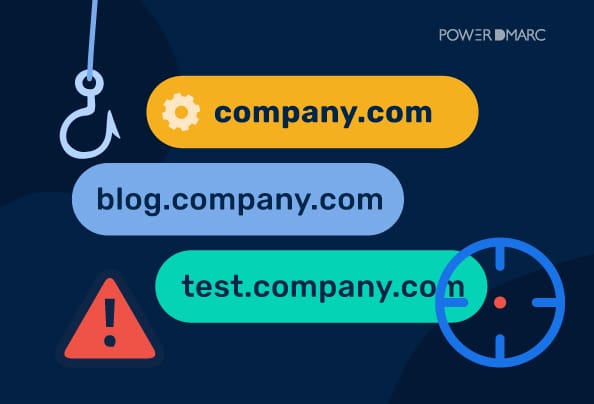
A big chunk of this risk is subdomain takeover. That’s when a subdomain points to a service you no longer use. If you had shop.yourcompany.com once connected to a third-party platform and never removed the DNS entry, an attacker could swoop in, claim the resource, and take control of the subdomain.
This isn’t just theory. Michael Perkins from essaywriters.com notes that scammers even clone academic writing services to trick students. In a 2024 internal survey, he found over 12% of student complaints were linked to impersonator sites – proof that even essay writers face domain-level fraud.
| Threat | Description | Example |
|---|---|---|
| Domain spoofing | Attackers create lookalike domains or forge your domain name to trick users. | A fake login page on "yourbrand-secure.com" steals customer credentials. |
| Subdomain hijacking | Criminals take over forgotten or misconfigured subdomains. | Old shop.yourcompany.com still points to a retired service, hijacked for spam. |
| Email spoofing | Forged sender names or headers make emails appear to come from your domain. | Fake invoices sent "from" @yourcompany.com trick clients into paying scammers. |
Attack Vectors in Action
Subdomain Hijacking
The most famous case was the SubdoMailing campaign (2022-2024). Attackers hijacked more than 8,000 subdomains across brands like MSN, VMware, McAfee, The Economist, and Marvel. Because the subdomains still carried trusted names, criminals sent millions of phishing emails that slipped past filters.
Microsoft Azure alone sees around 15,000 vulnerable subdomains each month. Researchers warned over 1,000 organizations, and 98% ignored the alerts. That’s a lot of unlocked doors left swinging in the wind.
Email Domain Spoofing
Here, criminals forge the sender’s name or header to make an email appear to come from your company. Victims see the brand they trust and click.
In 2024, Facebook’s domain was spoofed in 44,750 phishing attacks. And this wasn’t a one-off. According to the APWG global phishing trends report, phishing reached record highs in 2023, with almost five million incidents logged. Most of these attacks involved domains designed to look familiar.
Without domain spoofing protection, even a small organization risks its reputation being hijacked for someone else’s scam.
Business and Brand Impact
You might wonder: what’s the worst that could happen if a forgotten subdomain or spoofed email slips through? A lot.
- Reputation. When phishing emails or fake websites carry your name, trust collapses. Customers don’t care if it was your mistake or a criminal’s trick – they see your brand on the attack.
- Financial losses. The average cost of a phishing-related data breach in 2024 was $4.9M. And that doesn’t count indirect losses like churn or refunds.
- Customers as targets. A spoofed checkout page or cloned portal drains wallets and steals credentials. Your users become collateral damage.
- Operational chaos. Blacklisted domains, sudden downtime, or scrambling to tell customers “don’t trust emails from us” create pure disruption.
- Compliance and legal trouble. GDPR, HIPAA, or local data laws don’t excuse sloppy domain management. If your negligence enabled fraud, lawsuits follow.
And while you may want to know how to stop domain spoofing once it happens, the truth is simple: prevention is far cheaper than response.
Real-World Impact of Domain and Subdomain Attacks
| Company/Type | Attack | Consequences |
|---|---|---|
| MSN (Microsoft) | Subdomain hijacking (SubdoMailing campaign) | Hijacked subdomain used to send phishing emails, damaging brand trust. |
| Domain spoofing | 44,750 phishing attacks in 2024 impersonated Facebook, tricking millions of users. | |
| SaaS Startup | Email spoofing | Fake invoices sent from spoofed domain → clients lost money, brand reputation harmed. |
Prevention and Protection Strategies
Here’s where you take control. Managing multiple domains safely is about layers of defense.


1. Auditing everything
Keep a current inventory of all domains and subdomains. Kill unused records fast to shrink your attack surface.
2. Secure DNS
Use registry locks for key domains. Enable DNSSEC to prevent tampering. Remove dangling records when a service is retired.
3. Email authentication
Deploy SPF and DKIM, then lock it down with DMARC. Publish policies that reject unauthenticated mail.
4. Lookalike monitoring
Watch for typosquats and homoglyph domains. Register the most obvious variants yourself if the budget allows.
5. Hardened subdomains
Apply HTTPS everywhere. Isolate apps so one breach doesn’t spread. Monitor certificate logs for suspicious changes.
6. Training teams and customers
Teach employees to spot spoofed emails. Share clear instructions that help your customers check if a message is genuine.
7. Using security tools
Platforms like PowerDMARC or other attack surface monitoring tools give you visibility across sprawling domain portfolios.
Emerging Trends 2022-2025
The risks aren’t shrinking. Here’s what’s shaping the next wave:
- Phishing at scale. Nearly five million phishing attempts in 2023, and the curve is still rising.
- Cloud misconfigurations. SaaS and cloud services drive growth but also leave behind thousands of vulnerable subdomains.
- New TLD abuse. Domains ending in .xyz, .app, or .shop are heavily abused in phishing campaigns.
- AI automation. Attackers use bots and AI to scan for misconfigurations faster than humans can fix them.
- Greater awareness. Regulators, insurers, and platforms are starting to demand stronger defenses. Adoption of DMARC is climbing, slowly but surely.


Final Thoughts
Running multiple domains is a big responsibility. Every domain you buy and every subdomain you spin up is part of your brand’s online property. Leave one unattended, and attackers will claim it.
On the bright side, now you know the risks, from domain spoofing to subdomain hijacking campaigns, and you’ve got the playbook for prevention. Audit your domains. Lock down your DNS. Deploy DMARC. Monitor for lookalikes. Educate your people.
Attackers will keep trying. But with vigilance, smart policies, and the right tools, you can keep your digital empire safe and thriving.



- PowerDMARC Recognized as Leader in DMARC Software for Winter 2025 - December 4, 2025
- LaunDroMARC: How a Microsoft SRS Loophole Is Laundering Spoofed Emails - December 4, 2025
- Top 6 DMARC Solutions for MSPs in 2026 - December 3, 2025