


Key Takeaways
- Advanced spam filters analyze sender behavior, not just content, making consistent sending patterns critical for deliverability.
- Almost 17% of emails either land in spam or fail to reach recipients entirely.
- High-frequency bursts, sudden volume spikes, and inconsistent schedules trigger red flags with major providers like Gmail, Yahoo, and Outlook.
- Gradual volume scaling, predictable timing, and proper list management build a strong sender reputation.
- Monitoring inbox placement, bounce rates, and engagement metrics helps refine strategy and maintain long-term deliverability.
- Professional warm-up tools and systematic A/B testing optimize sending behavior and reinforce trust with email providers.
Email marketers today face advanced spam filters that analyze sender behavior, not just keywords. With 10.5% of emails landing in spam and 6.4% disappearing entirely, managing sending behavior is crucial. Email providers use machine learning to track patterns, rewarding consistent behavior and penalizing erratic activity, making reputation management essential for successful delivery.
Understanding Antispam Filters
Email security systems have transformed from simple keyword blocking to complex behavioral analysis platforms. Today’s filters examine multiple sender characteristics simultaneously to determine message legitimacy.
How Modern Antispam Filters Work
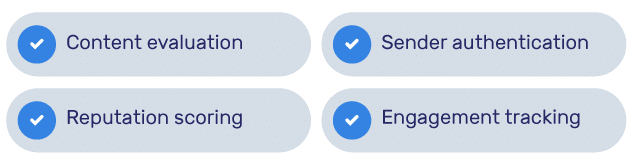

Contemporary antispam technology employs sophisticated detection methods that analyze various message elements:
- Content evaluation: Systems scan headers, body text, and embedded elements for spam indicators
- Sender authentication: Filters verify SPF, DKIM, and DMARC records for domain legitimacy
- Reputation scoring: Platforms maintain historical data about sender behavior patterns
- Engagement tracking: Systems monitor recipient interactions to assess message quality
Advanced filtering systems process enormous amounts of email data to spot spam patterns. These platforms evolve constantly to counter new spamming methods and suspicious sending behaviors.
Filtering technology now incorporates anomaly detection capabilities. These systems identify unusual sending patterns that deviate from established sender profiles. Even legitimate content faces filtering when sending behavior appears suspicious.
Why Sending Behavior Matters
Sender reputation directly correlates with inbox placement rates across all major email providers. Gmail, Yahoo, and Outlook maintain independent scoring systems that evaluate sending consistency over time.
Platform algorithms track specific behavioral metrics:
- Daily and weekly sending volume fluctuations
- Time consistency across campaign deployments
- Recipient engagement response patterns
- Bounce and complaint rate management
According to Google Email Sender Guidelines, email providers require spam complaint rates below 0.3% to avoid filtering penalties. Exceeding this threshold triggers immediate damage to your reputation and delivery restrictions.
Consistent sending schedules demonstrate legitimate business operations. Random timing patterns suggest automated spam systems rather than human-managed campaigns. Establishing predictable routines builds long-term deliverability success.
Email Sending Patterns That Raise Red Flags
Specific behavioral patterns immediately alert spam detection systems to potential threats. Recognizing these warning signs helps businesses avoid common mistakes that damage the sender’s reputation.
High-frequency Bursts of Emails
Rapid-fire email deployment mimics bot behavior, triggering immediate filtering responses. Legitimate businesses typically maintain steady sending rates throughout campaign periods rather than concentrated bursts.
Spam detection algorithms flag accounts exhibiting these characteristics:
- Thousands of messages sent within minutes
- Zero delays between individual message deployments
- Sudden activation after dormant periods
- Volume spikes without gradual increases
Email providers interpret burst patterns as indicators of compromised accounts. These behaviors suggest automated systems rather than human-managed communications. Sustainable sending requires distributed deployment over extended timeframes.
Professional email marketing involves careful pacing strategies. Spreading campaigns across several hours prevents triggering automated protection mechanisms while improving overall deliverability rates.
Inconsistent Schedules
Random sending times create confusion for reputation systems expecting predictable behavioral patterns. Email providers establish baseline expectations for each sender account over time.
Filter systems track timing consistency across multiple metrics:
- Daily sending windows and frequency variations
- Weekly pattern adherence and deviation rates
- Holiday and weekend activity levels
- Time zone alignment with target audiences
Filtering algorithms increase scrutiny when senders make sudden schedule changes without gradual transitions. Established senders gain an advantage by maintaining consistent timing patterns that recipients expect.
Business hours alignment improves both deliverability and engagement rates. Recipients expect promotional emails during specific timeframes based on sender history and industry standards.
Sudden Spikes in Volume
Dramatic volume increases without proper warming periods raise immediate red flags across all major email platforms. Spam operations frequently hijack legitimate accounts and immediately begin massive campaign deployments.
Filtering systems identify suspicious volume patterns through these indicators:
- 300-500% increases overnight without preparation
- Zero historical data supporting higher volumes
- Poor list quality accompanying volume growth
- Engagement rate drops correlate with increases
Gradual volume scaling allows reputation systems to adapt naturally. Sudden expansions suggest compromised accounts or purchased lists with questionable legitimacy. Sustainable growth requires patience and systematic increases.
Best Practices for Healthy Sending Patterns
Establishing consistent behavioral patterns builds lasting deliverability success across all email platforms. Professional senders develop systematic approaches that demonstrate legitimacy to filtering algorithms.
Volume scaling strategies:
- Start with conservative daily limits for new domains
- Increase sending volume by 20-30% weekly based on performance metrics
- Maintain steady daily volumes throughout active campaign periods
- Schedule regular breaks between major promotional pushes
Timing optimization approaches:
- Send emails during the recipient’s business hours within their time zones
- Establish consistent daily sending windows across campaign series
- Avoid weekend and holiday deployments unless specifically relevant
- Space individual messages with a minimum 3-second intervals during bulk sends
List management protocols:
- Remove hard bounces immediately following each deployment
- Suppress soft bounces after three consecutive failures
- Segment audiences based on historical engagement patterns
- Implement confirmed opt-in processes for all new subscribers
Professional warming services, such as Snov.io’s email warm-up tool, help establish positive sending patterns gradually. These platforms simulate natural engagement while building reputation scores with major providers.
Monitoring and Adjusting Email Strategy for Better Deliverability


Tracking email performance daily helps catch delivery problems early. Checking important metrics regularly spots issues before they hurt campaign results.
Tracking Deliverability Metrics
Focus on measurements that directly indicate filter treatment across different platforms. These indicators provide early warning signs of reputation issues that require immediate attention.
Essential deliverability indicators:
- Inbox placement percentage: Messages reaching primary folder destinations
- Spam folder classification: Emails filtered to junk directories
- Bounce rate tracking: Undelivered messages across all failure types
- Block rate monitoring: Messages rejected completely by receiving servers
A recent Q4 2024 analysis shows that delivery rates vary across different volume ranges, highlighting the need to monitor each email provider platform separately. Platform-specific tracking uncovers key differences in how Gmail, Yahoo, and Outlook handle the same senders, since each system maintains its own reputation database and filtering rules.
Learning from Performance Data
Performance correlation analysis reveals optimal sending strategies for specific audience segments. Examining relationships between timing, volume, and deliverability outcomes guides strategic decisions.
Data analysis methodologies:
- Compare inbox placement across different deployment days and times
- Track volume adjustments against engagement rate fluctuations
- Monitor reputation score changes provided by deliverability tools
- Analyze recipient behavior following various sending schedule modifications
Engagement metrics provide crucial feedback about filter treatment effectiveness. Higher interaction rates signal positive recipient response, which improves future delivery performance. Low engagement often precedes increased filtering activity.
Systematic A/B testing of different sending patterns optimizes long-term campaign performance. Testing volume distributions, timing variations, and frequency changes provides actionable data for strategy refinement.
Final Words
Email sending patterns directly impact deliverability, with nearly 17% of emails never reaching inboxes. Consistent schedules, controlled volume, and regular monitoring build a strong sender reputation. Using warm-up tools and maintaining predictable behavior ensures long-term success, as sustainable deliverability depends on systematic, ongoing management rather than short-term fixes.



- Email Security Predictions for 2026: What Companies Need to Prepare For - December 3, 2025
- Email Health Check: What It Means and How to Run It - November 26, 2025
- Top 6 DmarcReport (by DuoCircle) Alternatives and Competitors - November 25, 2025