


Key Takeaways
- Start with authentication: Enforce SPF, DKIM, and DMARC across all domains to build a compliant and spoof-proof email foundation.
- Prove identity control: Apply MFA, least privilege, and automated access management to reduce insider and external risks.
- Protect and retain data: Encrypt communications, classify sensitive content, and align retention with regulatory mandates.
- Centralize and demonstrate compliance: Use solutions like PowerDMARC to unify authentication, monitor abuse, and generate audit-ready evidence.
Modern enterprises live and breathe in inboxes and chat threads. That convenience comes with risk: attackers treat email and messaging as the front door to the business, while regulators expect provable controls to keep that door locked.
This article lays out practical, audit-ready checklists for enterprise teams that need to align operations with cybersecurity frameworks, without slowing communication to a crawl. It also reflects how platforms like PowerDMARC help organizations prevent email spoofing, enhance deliverability, and protect their domain reputation at scale.
Why Cybersecurity Compliance Matters for Enterprise Email
Email and messaging are among the most regulated communications channels in the enterprise stack. Auditors want evidence that you authenticate messages, protect personal data, retain records, and manage incidents. Meanwhile, attackers relentlessly target human trust. In 2024 alone, the FBI’s Internet Crime Complaint Center reported $16.6 billion in total internet-crime losses, underscoring just how high the stakes have become for everyday messaging workflows.
Checklist 1: Foundational Email Security Controls
These are the table-stakes controls auditors expect to see before they examine anything advanced. Each item should be mapped to a documented policy and a live configuration in your production tenants.
- Own your sending identity with email security protocols. Enforce SPF (Sender Policy Framework), DKIM (DomainKeys Identified Mail), and DMARC (Domain-based Message Authentication, Reporting & Conformance) on all corporate domains: primary, parked, and marketing. Treat alignment failures as policy violations and set DMARC to a monitored enforcement mode (quarantine or reject) once false positives are remediated. These email security protocols reduce the risk of spoofing and improve deliverability, which is essential for both resilience and compliance.
- Maintain a verified email sender inventory. Maintain a registry of all systems that send on behalf of your domains (marketing platforms, CRM, billing, ticketing). Each entry should include purpose, owner, and authentication status. Review changes monthly.
- Secure inbound mail. Enable advanced threat protection: attachment sandboxing, URL rewriting, and impersonation detection. Require TLS in transit for partner-to-partner mail where feasible. When you evaluate exceptions, record the business justification.
- Control external identities. Apply strict policies for display-name impersonation, lookalike domains, and vendor spoofing. Train employees to verify out-of-band when high-risk requests arrive via email.
- Centralize logging and reporting. Funnel DMARC aggregate/forensic reports to a managed analyzer so security teams can detect misconfigurations and abuse quickly. Evidence from these reports often becomes a key audit artifact.
Tip: If your organization also handles voice interactions, understanding how to detect caller ID spoofing helps you align phone and email anti-impersonation policies so that messaging and telephony controls tell a consistent story during audits.
Checklist 2: Role-based Access and Identity Compliance
Human access drives both risk and compliance scope. Prove you have disciplined identity management across email and chat platforms.
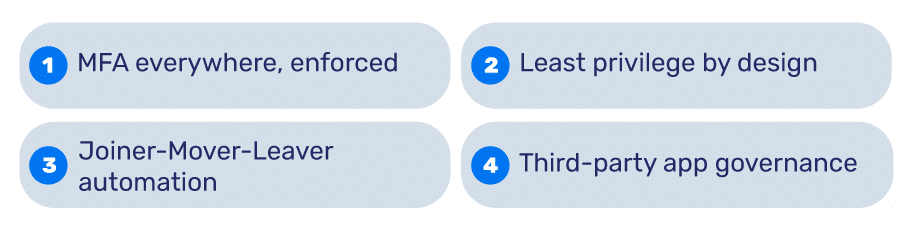

- MFA everywhere, enforced. Use phishing-resistant factors (FIDO2/WebAuthn or platform passkeys) for admins and high-risk roles. Document any SMS-based MFA exceptions and their compensating controls, with review dates.
- Least privilege by design. Define hardened admin roles (e.g., Mailbox Admin vs. Transport Admin) and eliminate standing global admin accounts. Use just-in-time elevation with approvals for sensitive tasks.
- Joiner-Mover-Leaver automation. Provision and deprovision messaging access via your identity provider. Terminate tokens upon offboarding and archive mailboxes according to the retention policy.
- Third-party app governance. Maintain an allowlist for OAuth-permissioned apps that can read/send mail or messages. Re-review scopes quarterly and revoke abandoned integrations.
Checklist 3: Data Protection and Retention
Cybersecurity compliance hinges on how you protect, store, and retrieve communications, especially when they contain personal or regulated data.
- Classify and label content. Use automated labeling in email and chat for sensitive data types (PII, PHI, financial). Enforce Data Loss Prevention (DLP) policies that block exfiltration or require justification.
- Encryption in transit and at rest. Require TLS for inbound/outbound email and baseline encryption for chat stores. Where mandates apply, enable S/MIME or PGP for specific workflows and maintain key management in an auditable manner.
- Retention schedules. Align retention with legal and business requirements (e.g., 7 years for certain financial communications). Apply litigation hold capabilities and maintain discovery procedures documented and tested.
- External sharing controls. In messaging platforms, restrict external federation and guest access to approved orgs, and watermark sensitive conversations to reduce snapshot risks.
Checklist 4: Threat Detection and Incident Response
Auditors expect both playbooks and proof that you can execute them when something goes wrong.
- DMARC and abuse monitoring. Track spikes in failed authentication and unauthorized senders. Investigate anomalies within defined SLAs and record outcomes.
- Fraud pattern alerts. Monitor for payment-change requests, executive impersonation, and atypical vendor invoices. Business Email Compromise remains a significant driver of losses; the FBI has tracked more than $55 billion in exposed global losses from BEC/EAC since 2013, a sobering indicator for any enterprise risk register.
- Phishing simulation with coaching. Run regular simulations tied to policy refreshers. Reinforce high-value behaviors such as calling known contacts on official numbers before authorizing transactions.
- Incident playbooks. Maintain runbooks for mailbox compromise, OAuth token theft, and mass phishing. Include steps for containment, forensics, notification to regulators (where required), and customer communication.
Checklist 5: Messaging Platform Security Compliance (Slack, Teams, etc.)
Email security protocols are only half the story. Chat platforms store sensitive data and make critical decisions, and they are increasingly targeted.
- Workspace structure and lifecycle. Standardize channel naming, access, and archives. Define when private channels are permitted and outline the process for onboarding external partners safely.
- eDiscovery and retention parity. Ensure chat histories meet the same retention requirements as email. Test your ability to hold and export records for legal matters.
- Security apps and bots. Review bot permissions and event subscriptions; scope them narrowly. Require code security reviews for in-house bots that handle sensitive data.
- File controls. Restrict public file shares and auto-scan uploads for malware and sensitive content patterns.
Checklist 6: Proof for Auditors
Great controls still fail audits without evidence. Bake documentation into daily operations so your next review is fast and drama-free.
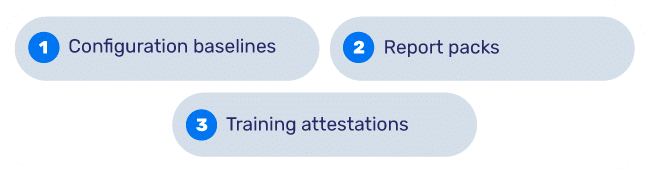

- Configuration baselines. Export SPF/DKIM/DMARC records, inbound policy screenshots, and MTA/TLS settings quarterly. Keep diffs in version control.
- Report packs. Produce monthly DMARC summaries, phishing simulation results, and abuse-desk cases with resolution notes. Map them to your control framework.
- Training attestations. Track completion for all employees and require additional training for high-risk roles that handle payments or customer data. If you are building a longer-term program, understanding the various benefits of cybersecurity education can help justify investments in staff development.
Because threat actors often mix channels, it is beneficial to plan educational content that spans multiple channels, including email, text, and social media. For example, if your workforce understands the psychology behind a honey trap scam in messaging apps, they are more likely to challenge a suspicious payment request that arrives via email minutes later. Cross-channel awareness translates directly into fewer incidents—and cleaner audits.
Security-First Culture in Enterprise Messaging
Technology enforces guardrails, but human-centered practices make those guardrails effective.
- Slow down high-risk actions: For wire transfers, vendor banking changes, or unusual invoice routing, a second channel verification is required using a phone number from your vendor master, not from the email thread. This habit blocks many BEC scripts.
- Teach recognition over memorization: Rather than long lists of “bad words,” train staff to notice context mismatches: tone shifts, urgency without detail, and requestors who avoid scheduled calls. Pair stories from real incidents with screenshots employees actually see.
- Decline to transmit secrets: Employees should never relay one-time codes, recovery links, or tokens via chat or email—even to internal colleagues. If your platform allows it, consider redacting or auto-blocking such content.
- Practice minimal exposure: Limit who can create new senders and domains. In chat, discourage direct messages for approvals; push decisions into logged channels where they are discoverable and reviewable.
- Use the voicemail principle: If a message looks odd, leave it and follow up using an official channel. This reduces pressure and keeps conversations in authenticated contexts—a core goal of cybersecurity hygiene.
Where PowerDMARC Fits in Your Cybersecurity Compliance Story
While compliance checklists are tool-agnostic, the “how” matters in production. PowerDMARC centralizes email security protocols management—SPF, DKIM, and DMARC—across all your domains and third-party senders.
This consolidation turns a sprawling authentication project into repeatable workflows, with policy enforcement, reporting, and abuse visibility you can hand to auditors. Just as importantly, authentication at scale tends to improve inbox placement, making legitimate messages more reliable for your customers and partners.
Final word
Compliance is not an abstraction; it is the visible output of healthy operations across email and messaging. Start with enforceable email security protocols, connect identity to every action, and collect evidence as you go.
Platforms like PowerDMARC help operationalize authentication and reporting at the domain level, while your governance, training, and response plans keep the human workflows resilient. With clear checklists and steady practice, cybersecurity becomes something your teams live every day, not just a box you check at audit time.


- Email Security Predictions for 2026: What Companies Need to Prepare For - December 3, 2025
- Email Health Check: What It Means and How to Run It - November 26, 2025
- Best Email Deliverability Tools: Improve Inbox Placement - November 18, 2025