


Key Takeaways
- Email verification leads to clean lists, which improve deliverability, engagement, and sender reputation.
- Clean lists improve deliverability, engagement, and sender reputation.
- Verification helps reduce wasted resources and improve reporting accuracy.
- Authentication, regular cleaning, and double opt-in keep campaigns accurate, compliant, and effective.
Contact databases naturally lose accuracy over time as people change jobs, switch domains, or abandon old email accounts. The result is a gradual decline in deliverability, higher bounce rates, and a weakened sender reputation that makes it harder for messages to reach the inbox. Inactive or duplicate addresses also waste marketing resources and distort performance insights.
Email verification solves these problems by confirming that all contact addresses exist as active and authentic email addresses. The practice of verifying emails on a regular basis leads to better delivery success rates while safeguarding your reputation and guaranteeing that all sent messages find their way to actual recipients.
What Is Email Verification?
Email verification is the process of checking an email address to ensure it is valid, active, and capable of receiving messages. It goes beyond simply determining whether an email contains an “@” symbol. It involves multiple checks to identify addresses that could damage your sender reputation and deliverability.
How email verification works
The process of email verification consists of multiple stages that confirm each address in your database exists and remains active. To verify an email, the system is used for:
- Perform a syntax check that verifies addresses contain the correct format structure.
- Perform domain validation that verifies the domain exists as a mail recipient.
- Perform MX record verification that confirms the domain has proper mail exchange records for email delivery.
- Perform mailbox detection that verifies the individual inbox remains active and accepts incoming messages.
- Perform SMTP validation that verifies the mail server accepts addresses during transmission.
- Detect spam traps like deceptive addresses and identify spammers.
Simplify Email Lists with PowerDMARC!
Why Email Verification Is Important
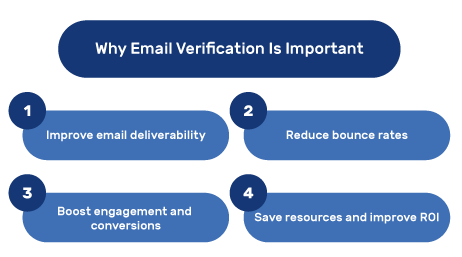
Email verification is not just cleaning up your email list—it’s about maintaining a healthy email marketing strategy and a targeted email address database that drives results. Below are the key reasons why email verification is essential for your business:

1. Improves email deliverability
Email deliverability measures how many of your emails actually reach inboxes rather than being filtered as spam.
Your sender reputation suffers when you send messages to addresses that do not exist or are no longer active because email service providers use this trust signal to determine inbox placement.
By removing invalid addresses before sending, verification lowers bounce rates and ensures your messages reach valid recipients. This way, the system prevents both hard bounces, which occur when addresses are invalid or accounts are closed, and soft bounces, which result from temporary issues like full inboxes or server delays.
2. Protects your sender reputation
Your sender reputation reflects how trustworthy your domain appears to mailbox providers. If your list contains spam traps and inactive accounts, it indicates poor management practices.
Your emails will end up in spam folders when your list contains spam traps and inactive accounts. The most severe cases result in blacklisting, which occurs when your list contains spam traps and inactive accounts.
Your contact base stays clean through verification, which proves your outreach methods are legitimate and well-managed, thus protecting your deliverability and maintaining your long-term credibility.
3. Saves resources and increases ROI
Each unsuccessful email delivery consumes time, money, and work without generating any useful outcomes. Since most email platforms charge based on send volume, contacting invalid addresses leads to unnecessary costs.
Your marketing efforts will naturally achieve better results if you direct your messages to actual subscribers who show interest. The verification process helps in this regard, enabling marketing teams to operate efficiently while making decisions based on trustworthy data.
4. Boosts engagement and conversions
Your messages will achieve better engagement when they successfully reach people who actually want to receive them. Verified contact lists help with this, leading to better quality interactions.
Once your list is accurate, you can further improve results through segmentation and personalization, creating messages that align with recipients’ needs and behaviors. This relevance encourages trust and leads to stronger, long-term relationships.
When Should You Verify Your Email List?
Email verification should operate as a standard procedure for maintaining your contact database. The natural deterioration of databases requires periodic verification to sustain performance levels and stop deliverability problems from developing.
You need to verify your email list during three specific situations:
- Before major campaigns, to ensure accuracy.
- After importing new contacts, whether from forms, events, or third-party tools.
- When bounce rates rise, this often signals list decay.
Most businesses should run email list verification processes every few months. Real-time verification tools operate during sign-up form entry to validate addresses, which helps prevent initial errors from occurring.
Best Email Verification Tools
Your email list needs reliable verification tools in order to achieve better delivery rates and protect your sender reputation. With 424 billion emails projected to be sent and received daily in 2026, standing out and reaching the right inbox is more challenging than ever.
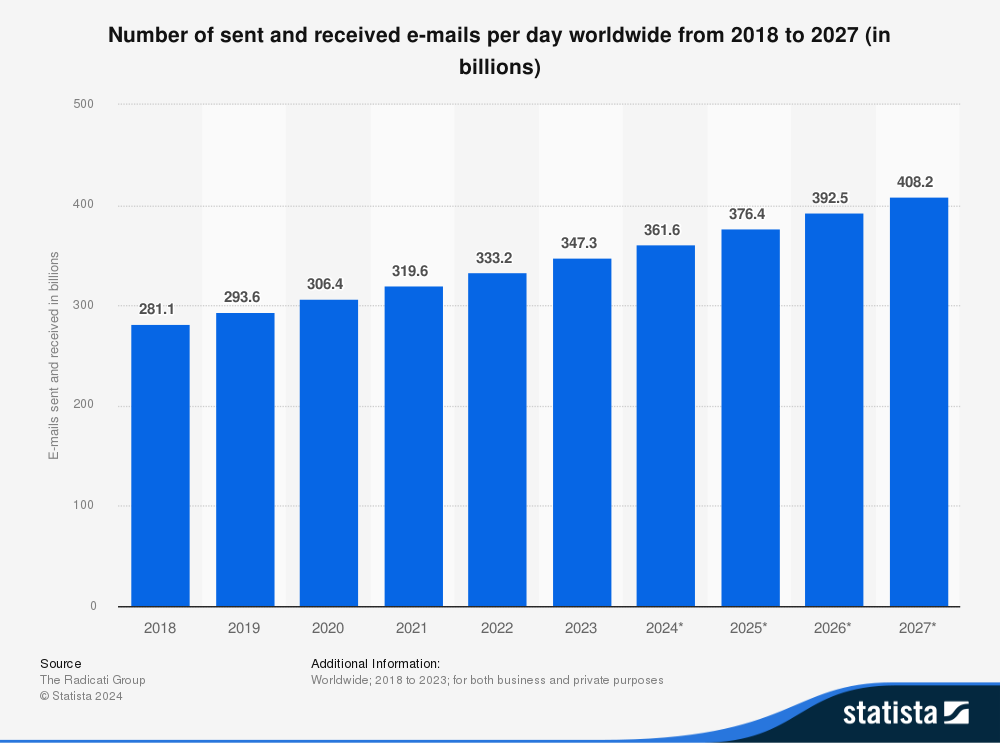

(Image source: Statista)
Email verification tools can help you deliver messages to valid addresses and maintain a clean contact list for better campaign results. Some such tools include:
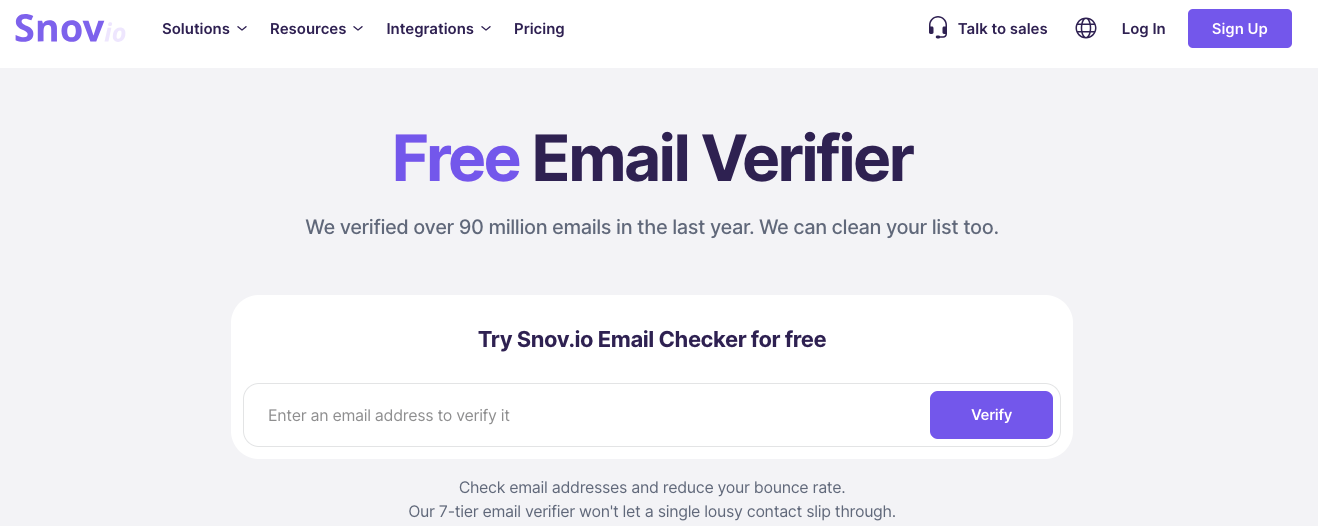
1. Snov.io

(Image source: Snov.io)
This tool provides verification services alongside outreach automation tools for teams operating at small to mid-sized levels. The system performs multiple verification steps while connecting to CRM systems and LinkedIn platforms, enabling bulk verification processes.
2. BriteVerify

(Image source: Briteverify)
This one provides basic verification services through its pay-per-use system, which suits users who need occasional list cleaning. The system delivers immediate results through real-time validation while providing seamless platform connections.
3. NeverBounce

(Image source: Neverbounce)
It provides fast and large-scale verification services to high-volume marketers who need them. The system provides API access and performs real-time and bulk verification checks while generating detailed reports.
4. Hunter.io

(Image source: Hunter.io)
This tool provides email discovery services that work with verification tools to support lead generation operations. The system allows users to search domains, verify lists, and access a validation API.
5. ContactOut

This one specializes in delivering precise professional contact information for recruitment and business-to-business purposes. The system provides triple-verified data through its Chrome extension and enables CRM system connections.
Best Practices for Email Verification
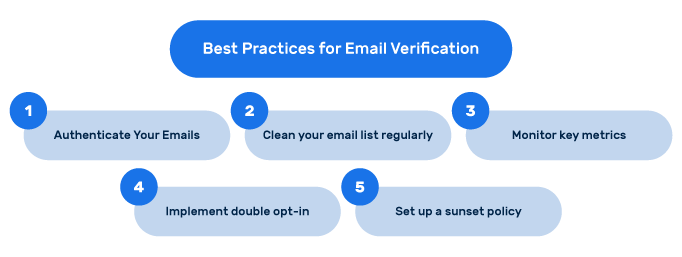

To actually implement email verification successfully, you should:
1. Authenticate your emails
Email authentication is a critical component of maintaining secure, trustworthy, and effective communication with your recipients. It involves implementing protocols like SPF (Sender Policy Framework), DKIM (DomainKeys Identified Mail), and DMARC (Domain-based Message Authentication, Reporting, and Conformance).
Implementing these practices will enhance your domain’s security and improve deliverability rates.
Check your domain security score today!
2. Clean your email list regularly
Your email list requires periodic maintenance because it will naturally accumulate invalid addresses even when you perform excellent list management. Part of this maintenance is periodic verification since, as mentioned, email addresses change frequently, and new invalid addresses may appear before you can verify them.
Your ESP or verification tool should perform automated cleaning operations to detect and remove inactive and invalid contacts from your list.
Your email list accuracy improves when you perform scheduled hygiene checks every three to six months, which also enhances your sender reputation and delivers messages to the correct recipients.
3. Monitor key metrics
Verification alone does not guarantee list health because performance metrics help you understand how your emails interact with recipients.
The following essential metrics are of particular importance:
- Your list should have less than 2% bounce rate because high numbers indicate that your addresses are no longer valid.
- The spam complaint rate should stay below 0.1% because any higher value indicates subscribers do not recognize or trust your emails.
4. Implement double opt-in
The verification process of double opt-in requires subscribers to confirm their email address after signing up before they join your mailing list. The verification process protects your list from bots and mistyped addresses because it confirms that subscribers actively want to receive your content.
Double opt-in implementation improves list accuracy while protecting your sender reputation and helping you meet GDPR and CAN-SPAM regulations.
You should activate double opt-in for all lead capture forms because it helps you build an audience of verified subscribers from the beginning.
5. Set up a sunset policy
The sunset policy enables you to remove subscribers who have not shown interest in your emails during a specified time frame, which usually ranges from three to six months.
Your list will become more responsive when you remove unengaged subscribers because you will maintain a smaller yet highly active contact database. The method improves delivery rates and builds sender credibility while focusing marketing efforts on people who actively want to receive your messages.
Conclusion
Email verification is an essential practice that all users who handle email communications must adopt. The practice of email verification protects your ability to deliver messages while maintaining your sender reputation and ensuring your messages reach actual subscribers.
Regular verification and authentication processes with proper data hygiene practices enable businesses to maintain continuous customer interaction, which drives long-term marketing expansion.
To further enhance your deliverability and domain security, explore PowerDMARC’s tools to protect your domain and ensure every email you send is trusted and verified.
Frequently Asked Questions
How does email identity verification work?
Email verification checks if an address is real, active, and able to receive messages. It confirms that emails follow correct formatting rules, that their domains exist, and that their inboxes function correctly.
What happens if I send unverified or invalid emails?
Sending to invalid addresses hurts your sender reputation and increases bounce rates. Your messages will end up in spam folders, or your domain might get blocked because email providers view multiple delivery failures as evidence of inadequate list management.
Does email verification affect GDPR compliance?
Yes. Your list verification process ensures you send emails to actual subscribers who have given their consent to receive messages. The process helps organizations comply with GDPR and CAN-SPAM regulations and other similar laws because it minimizes the chances of sending unauthorized messages.
What is the difference between email verification and email validation?
Email verification checks if an address is real and active. Whereas email validation only confirms that the address is written in the correct format (for example, with the “@” symbol and a valid domain).


- Email Verification: Steps, Tools, and Best Practices - November 17, 2025
- Google and Yahoo Updated Email Authentication Requirements for 2025 - November 6, 2025
- Building Brand Credibility with Email Authentication - May 2, 2022