6 Ways a Personal Data Breach Can Threaten Your Business Security

by
Last Updated:
5 min read

by
Last Updated:
Key Takeaways
Running an online business means your personal and work data are frequently intertwined. When one is exposed, the other one is not far behind.
This fact raises a valid concern: what effect can a personal data breach have on the security, finances, and reputation of your company? Moreover, how do the stakes rise if the breach leads to identity theft?
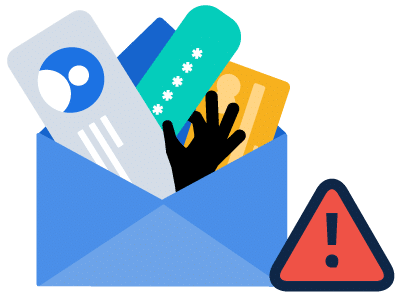
Most breaches start with a leaked password, a compromised email, or an exposed admin login. But when attackers get access to a single account, it’s just the beginning. They might change passwords, explore connected systems, and use their findings to gain more access. Impersonation plays a major role in these attacks. For example, recent reports show that bank impersonators fueled a $262 million surge in account takeover fraud.
If hackers compromise your email, it may be used to reset the credentials across any payment processors, cloud platforms, or CRM tools.
For an e-business, this virtual mishap can quickly turn out into real damage:
A “minor” leak can stop your operations altogether, and without the right measures, it will continue to grow.
Identity theft can manifest itself in many ways. One day, you might notice a suspicious activity in your financial statements and come to realize: “Has someone opened an account in my name?”
A scammer only needs your Social Security number and some other personal details to ruin your credit history and place illicit financial burdens on your account. To avoid painful consequences, you must know how to determine if someone has opened an account under your name and act quickly. The faster you know what’s going on, the more you can do to keep the fallout under control.
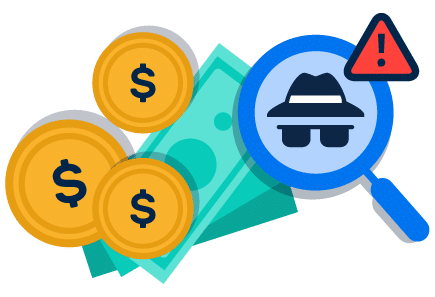
Compromised financial information leads to direct fraud. You might start noticing unaccounted wire transfers, altered banking information, or questionable refunds. If left unmonitored, these factors can escalate rapidly, skyrocketing into financial discrepancies that are harder to trace and recover from.
In other instances, hackers threaten to pose as vendors or executives to demand emergency payments. Surprisingly, these social engineering tricks are effective, particularly within organizations where everything moves fast. Attackers can more easily take advantage of trust and urgency when employees are under pressure, bypassing various verification procedures.
For e-commerce businesses, even short-term financial manipulation can mess with cash flow, supplier contracts, and payroll schedules. And when customer payment data is at risk, the repercussions are more severe. You might face compliance investigations and legal issues. Furthermore, businesses may also suffer damage to their reputation, customer trust loss, and long-term revenue decline as clients become hesitant to share their financial information.
Customers entrust businesses with confidential data like their names, emails, payment details, and addresses.
If confidential data gets exposed due to a personal data breach involving your business accounts, your customers won’t distinguish between personal and professional. They will interpret it as a company failure.
Research findings always indicate that data breaches cause the following:
It takes years to establish a reputation and one night for an attack to undermine all the hard work. For email security and domain protection companies, such as those with DMARC and authentication policies, identity protection directly correlates with brand protection.
Legislation in the U.S. about protecting personal information keeps changing. Depending on where you work and what you do, you may have certain duties to follow if personal or customer data gets out.
Following a breach, a business might have to do the following:
Delaying or neglecting to take action adds liability. A personal data breach, apart from being a technical issue, is also a legal and operational problem that needs a structured response.
You should never overlook the consequences of a data breach. Stolen information doesn’t just disappear. Combined with other stolen credentials, hackers can sell them on the dark web. A single exposure may result in multiple attempts against your systems.
Credit report and identity verification services provider 700Credit disclosed a data breach impacting more than 5.8 million individuals, showing how large volumes of identity data can be exposed at once and then redistributed.
If you suspect identity misuse, immediately contact credit bureaus and place fraud alerts to prevent hackers from opening other unauthorized accounts. Afterwards, go back to the basics:
Communication within the team is also significant. If information about your colleagues can be compromised, be open about the issue instead of keeping it quiet.
Identity theft can lead to problems with operations, fraud, and damage to your image. Therefore, protecting your company’s stability starts with personal cybersecurity and solid prevention techniques.
Involvement from the leadership is also necessary, as is a strong corporate culture of accountability, where each employee understands their responsibility to protect sensitive data.







 IP Reputation vs. Domain Reputation: Which One Gets You Into the Inbox?