How to Leverage Email Authentication Solutions (SPF, DKIM, and DMARC) to Stop Email Spoofing?

by
Last Updated: 6 min read

by
Last Updated: Key Takeaways
Email authentication standards: SPF, DKIM, and DMARC are showing promise in cutting down on email spoofing attempts and improving email deliverability. While differentiating spoofed (fake) emails from legitimate ones, email authentication standards go further in distinguishing if an email is legitimate by verifying the identity of the sender. With increasing reliance on technology and the internet, cybersecurity threats have become more sophisticated and manifest in various forms, such as address spoofing, phishing, malware attacks, hacking, and more.
As more organizations adopt these standards, the overall message of trust and authority in email communication will begin to reassert itself. Every business that depends on email marketing, project requests, financial transactions, and the general exchange of information within or across companies needs to understand the basics of what these solutions are designed to accomplish and what benefits they can get out of them. Unsurprisingly, today’s digital ecosystem is filled with malicious tactics and strategies to bypass the privacy and security structures of businesses, government organizations, and individuals. Out of all these approaches, address spoofing (or email spoofing), wherein the hackers use deceptive ways to impersonate legitimate email senders, is the most common.
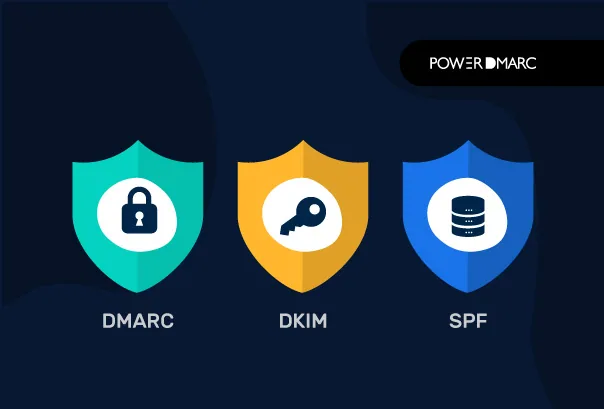
Email spoofing is a common cybersecurity issue encountered by businesses today, sometimes referred to as address spoofing. In this article, we will understand how spoofing works and the various methods to fight it. We will learn about the three authentication standards used by email providers − SPF, DKIM, and DMARC to reduce its success.
Email spoofing can be classified as an advanced social engineering attack that uses a combination of sophisticated techniques, sometimes including IP header manipulation, to manipulate the messaging environment and exploit legitimate features of email. These emails will often appear entirely legitimate, but they are designed with the intention of gaining access to your information and/or resources. Email spoofing is used for a variety of purposes ranging from attempts to commit fraud, to breach security, launch phishing or malware attacks, and even to try to gain access to confidential business information. As a very popular form of email forgery, spoofing attacks aim to deceive recipients into believing that an email was sent from a business they use and can trust, instead of the actual sender whose identity is concealed. As emails are being sent and received daily in bulk, this malicious form of email scam has increased dramatically in recent years.
Email authentication helps you verify email sending sources with protocols like SPF, DKIM, and DMARC to prevent attackers from forging domain names and launch spoofing attacks to trick unsuspecting users. It provides verifiable information on email senders that can be used to prove their legitimacy and specify to receiving MTAs what to do with emails that fail authentication.
SPF, DKIM, and DMARC can help:
Note: DMARC only authenticates emails claiming to come from your exact domain; it cannot block lookalike domains or force receiving servers to obey your policy.
SPF is an email authentication technique used to prevent spammers from sending messages on behalf of your domain. With it, you can publish authorized mail servers, giving you the ability to specify which email servers are permitted to send emails on behalf of your domain. This information is saved in a special DNS record known as an SPF record. When an email server gets a message, it checks the SPF record of the domain in the envelope sender (MAIL FROM) address to see whether the sending server is authorized.
An attacker can pass SPF with their own domain while showing a different identity in the From header. SPF alone does not stop From-address spoofing; DMARC alignment is what links SPF to the From domain. Hence, SPF is not a comprehensive solution for dodging exact-domain spoofing, which is why other email authentication mechanisms, such as DKIM and DMARC, are employed to provide an extra layer of protection.
If you want to leverage SPF in a way that would ensure its proper functioning, you need to ensure that SPF doesn’t break for your emails. If evaluating your record needs more than 10 DNS-querying mechanisms and modifiers (include, a, mx, ptr, exists, redirect), SPF returns permerror. SPF flattening can help you stay under the limit in most cases, although it is not a guaranteed solution in all cases.
Impersonating a trusted sender can be used to trick your recipient into letting their guard down. DKIM adds a digital signature to outgoing messages, letting the receiver confirm that the signing domain took responsibility for the message. DKIM allows domain owners to digitally sign their messages with a private key. The recipient’s email server validates this digital signature using a public key stored in the domain’s DNS records. A valid signature tells the receiver which domain is responsible for the message, which receivers combine with other signals. A failed signature on its own should not cause rejection.
DKIM affixes a unique hash value, linked to a domain name, to each outgoing email message, allowing the receiver to check that an email claiming to have come from a specific domain was indeed authorized by the owner of that domain or not.
Simply implementing SPF and DKIM can help verify sending sources but isn’t effective enough to stop spoofing on their own. In order to stop cybercriminals from delivering fake emails to your recipients, you need to implement DMARC today. DMARC is a comprehensive email authentication protocol that helps identify spoofed emails and prevent them from being delivered to user inboxes. Implementing DMARC improves email deliverability and helps build a compelling brand reputation. This protocol helps prevent spoofing and phishing attacks by enabling domain owners to designate how their messages should be handled if they fail DMARC. It checks that the domain in the From address matches the domain authenticated by SPF or DKIM. Moreover, it gives domain owners the power to specify to email receiving servers how to respond to emails failing SPF and DKIM authentication.
Domain owners can choose to express no preference (p=none), or request receivers to quarantine, or reject failed emails with an enforced policy (p=quarantine/reject). By providing an additional layer of protection against email-based attacks, DMARC helps ensure that only legitimate messages are delivered to recipients’ inboxes, helping to prevent the spread of spam and other malicious content.
Note: A DMARC policy at enforcement (quarantine or reject) is needed to act against spoofing.
Additionally, DMARC also offers a reporting mechanism to provide domain owners with visibility on their email channels and authentication results. By configuring our DMARC XML reader, you can monitor your email domains on a regular basis with detailed information on email sending sources, email authentication results, geolocations of fraudulent IP addresses, and the overall performance of your emails. It helps you parse your DMARC data into an organized and readable format, and take action against attackers faster.
Ultimately, SPF, DKIM, and DMARC can work together to help you improve your domain’s email security, and make it harder for attackers to spoof your domain.

 Why is Domain Name Security So Important for Today’s Businesses?