How to Get Gmail’s Blue Verified Checkmark (Step-by-Step)

by
Last Updated:
7 min read

by
Last Updated:
Key Takeaways
Gmail’s blue verified checkmark is one of the most impactful updates to modern email security, and if you’re sending emails to customers, it’s something you should absolutely aim to implement!
Google has been steadily strengthening its email authentication ecosystem, and this feature builds directly on that progress. By combining DMARC, BIMI, and Verified Mark Certificates (VMCs), Gmail now visually distinguishes trusted senders, making it easier than ever for recipients to identify legitimate brands.
This guide walks you through exactly how to qualify for and implement Gmail’s blue checkmark, step by step.
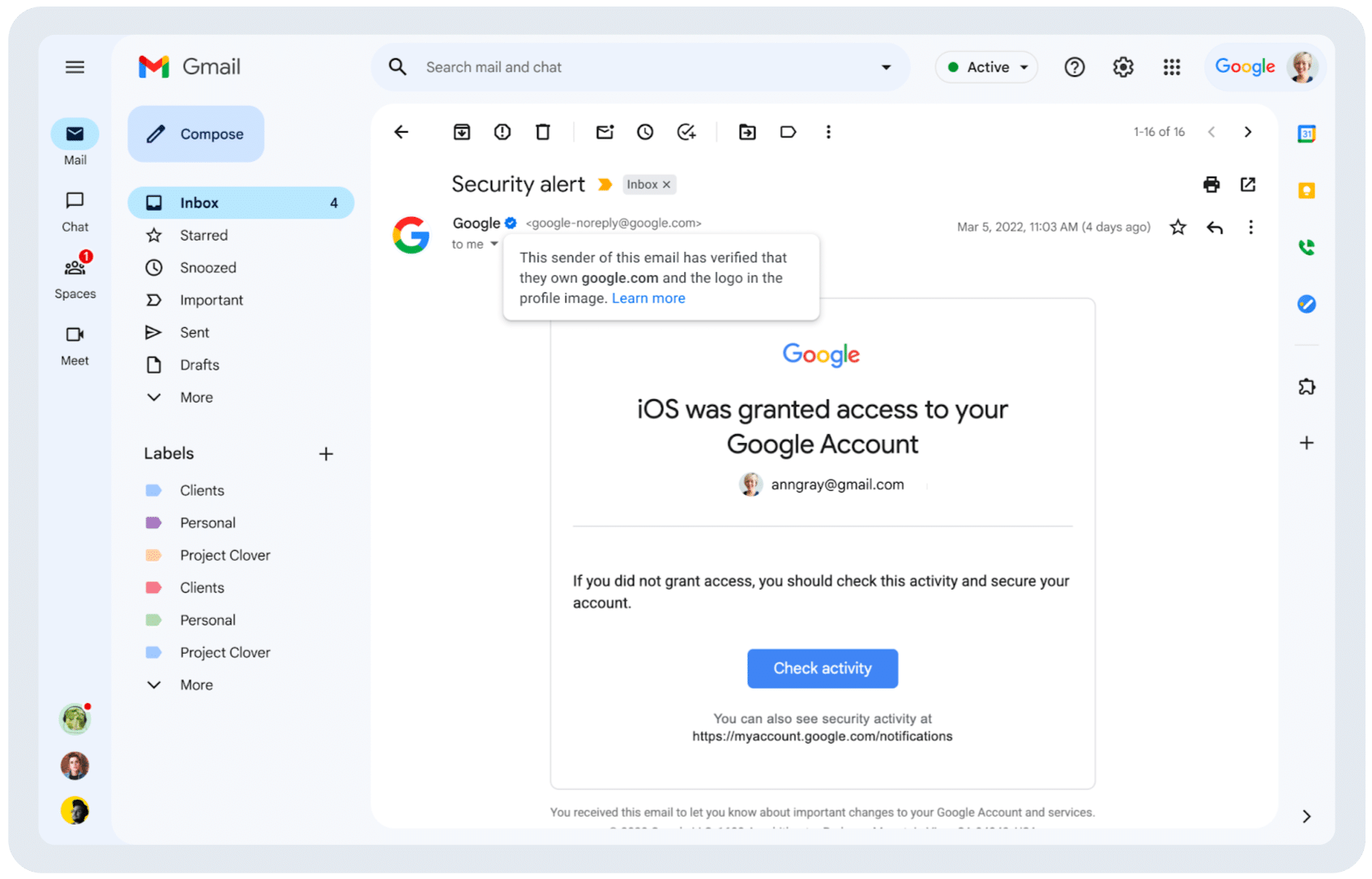
Gmail’s blue verified checkmark is a visual indicator that confirms the email sending domain is legitimate and authenticated. It appears only for the email senders who have:
While BIMI is a visual authentication standard that enables brand logos to appear in emails, VMC indicates that the brand has authority over the displayed logo. BIMI and VMC, when combined, are proof of an organization’s sincerity, authenticity, and credibility, and Google awards email senders maintaining such a high degree of email security compliance by adding a small blue verified checkmark against the sender’s name in the email.
Spoofed emails are one of the most common phishing tactics. The blue checkmark helps users quickly identify legitimate senders, which helps visually distinguish between impersonated and genuine messages.
Email is one of the most prevalent modes of communication, used to transfer sensitive information between organizations and entities. Verified emails stand out visually, making them appear more credible and trustworthy in crowded inboxes.
By making DMARC enforcement and BIMI adoption mandatory for obtaining the blue checkmark, Google is pushing organizations toward stronger authentication practices.
To qualify for Gmail’s blue verified checkmark, organizations must:
Your domain must have a DMARC policy set to p=quarantine or p=reject with proper SPF and DKIM alignment. This ensures unauthorized senders are blocked, which is one of Gmail’s key requirements for verification.
BIMI allows your brand logo to appear in emails by publishing a BIMI DNS record and hosting your logo in SVG Tiny PS format. However, Gmail requires BIMI + VMC together for verification.
A VMC is a digital certificate that confirms your ownership of the logo and is issued by a trusted certificate authority. It also requires your logo to be officially trademarked.
In 2026, Google announced that it now accepts Common Mark Certificates (CMCs) for BIMI logo display in Gmail, making it easier for SaaS startups and e-commerce brands to show their logos without trademark registration. However, a CMC is not enough to obtain Gmail’s checkmark.
You can manually publish your SPF and DKIM records in your DNS or generate them automatically using PowerDMARC’s free SPF generator and DKIM generator tools for a more accurate and error-free result.

We also offer a DNS auto-publishing feature for users who do not want to manually publish their records by signing up on our platform.
Start with p=none. At this stage, you can:
You can manually publish your DMARC records in your DNS or generate them automatically using PowerDMARC’s free DMARC generator tool for a more accurate and error-free result.

Moreover, manually monitoring your DMARC reports creates inbox clutter and the hassle of navigating complex XML files. Our DMARC report analyzer solves this problem by parsing reports into human-readable data that anyone can understand.
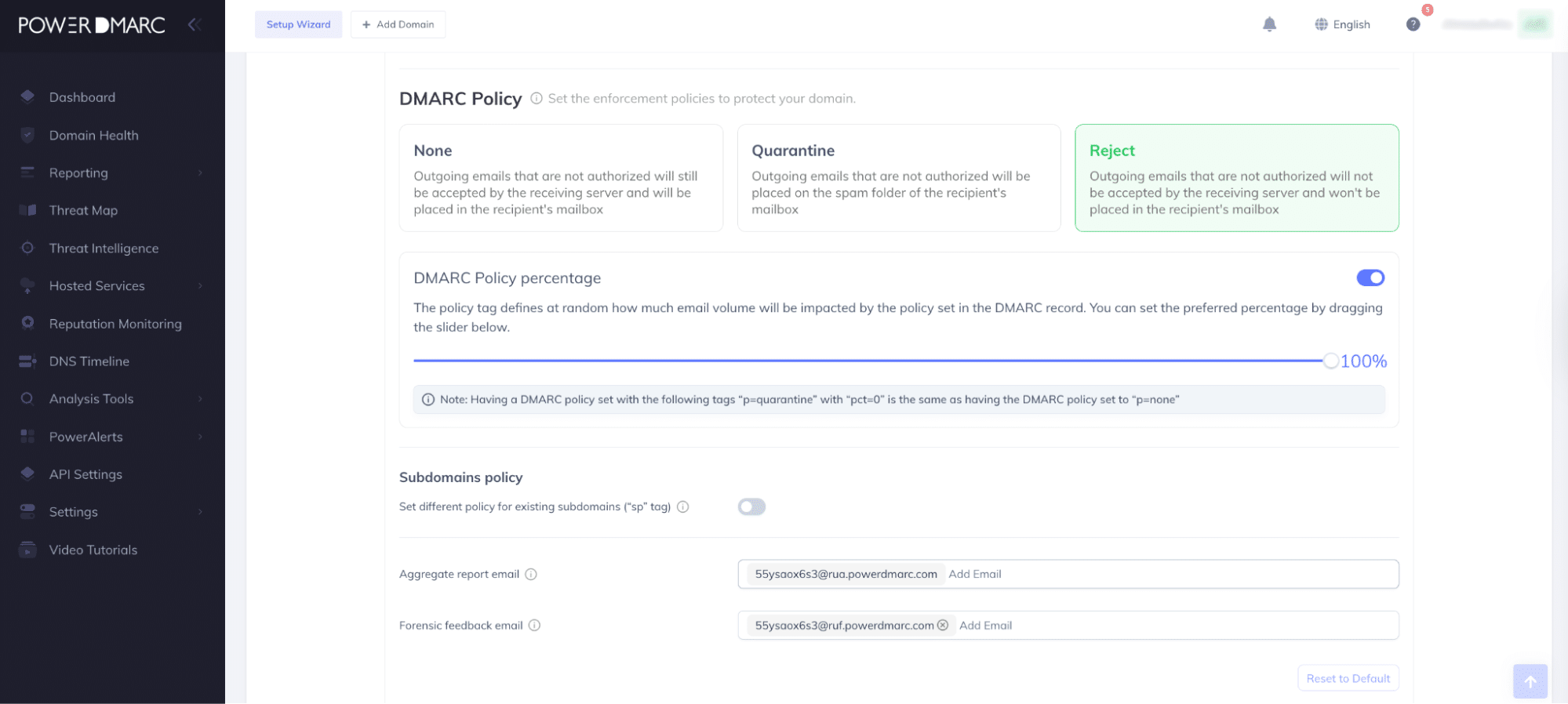
Now upgrade your DMARC policy to move from monitoring to enforcement by changing the value in the “p=” field from “none” to “quarantine/reject”. This is a critical step for BIMI implementation and Gmail blue checkmark eligibility.
You can do it manually by auditing your DMARC DNS record. Our hosted DMARC customers can toggle their policy mode from none to quarantine or reject with a simple one-click mechanism on their dashboard without the need for any manual DNS changes.
Step 4: Prepare Your BIMI Logo
Key BIMI logo requirements:
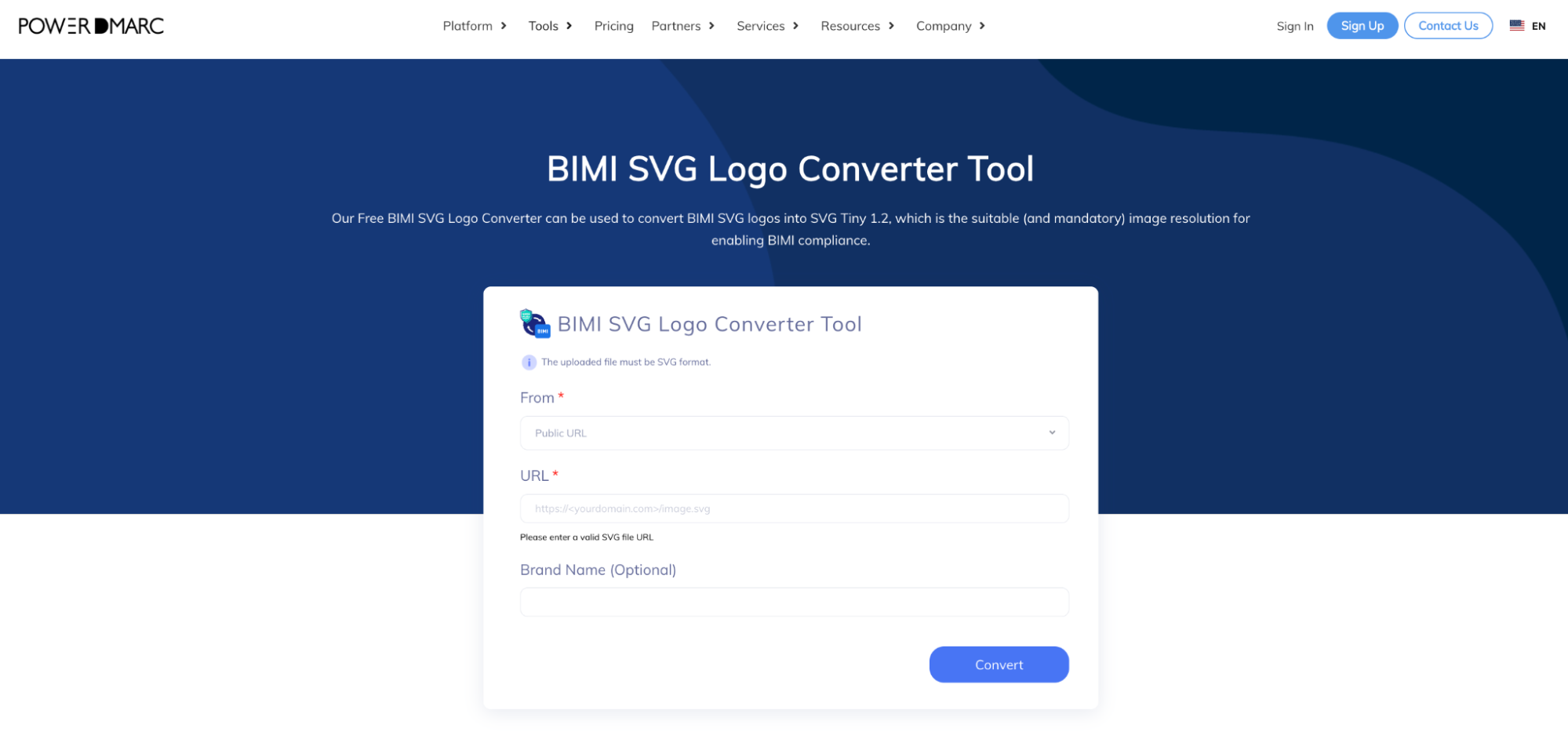
Note that common challenges at this step include incorrect SVG formatting, missing trademark registration, and logo hosting issues. To make it easier, PowerDMARC’s BIMI SVG logo converter helps you instantly convert your BIMI logo into the compliant format.
Through our strategic partnership with GlobalSign, we help organizations and MSPs with end-to-end VMC and CMC issuance as well as installation, so they don’t have to go through the hassle. If you want to buy your VMC or CMC, contact us today!
Publishing a BIMI record in your DNS involves creating a record manually or, preferably, using an automated tool. Example BIMI DNS Record:
default._bimi.example.com v=BIMI1; l=https://example.com/logo.svg; a=https://example.com/vmc.pem
PowerDMARC’s BIMI record generator tool creates a BIMI record ready for publishing within seconds, but for complete support with hosting your BIMI logo, organizations can try our hosted BIMI solution.
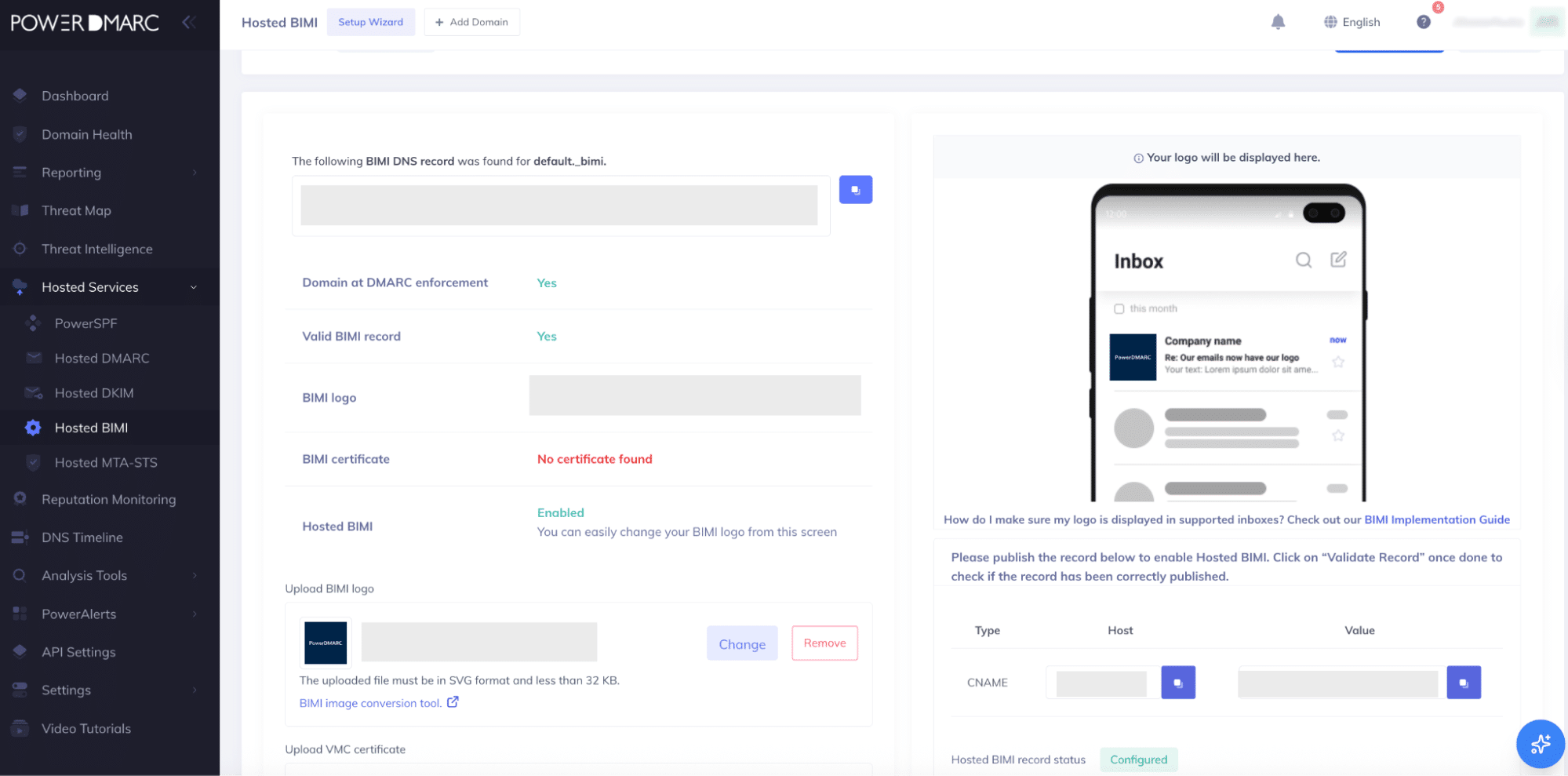
Once Gmail verifies your DMARC enforcement, BIMI record, and VMC certificate, the blue checkmark appears next to your sender name. The visibility timeline is usually within 24–72 hours.
You can check the status of your verification using our BIMI checker tool that shows you a mockup of how your brand logo and checkmark looks in the inbox in real-time. Here’s an example:

| Step | Estimated Time |
|---|---|
| DMARC enforcement | 1-3 weeks |
| Trademark validation | Varies |
| VMC issuance | 3-7 days |
| BIMI setup | 1 day |
Total implementation time: typically 2–4 weeks
As illustrated above, PowerDMARC simplifies the entire process of getting your blue verified checkmark for Gmail by offering:
Whether you’re starting from scratch or already at DMARC enforcement, PowerDMARC helps you fast-track your journey to Gmail verification, without the technical complexity.
Ready to get started with your journey toward verified emails? Get in touch with one of our email experts today.
Yes, the feature itself is free. However, obtaining a VMC certificate is a paid requirement.
Yes. As long as they meet DMARC, BIMI, and trademark requirements, they are eligible.
It appears only when Gmail successfully verifies your domain and BIMI configuration.
You cannot obtain a VMC without a registered trademark, but Gmail allows brands to display their logo with a CMC that doesn’t require a trademark. However, Gmail’s blue checkmark is only applicable to brands that have obtained a VMC.








 AI in Cybersecurity